Best Quran Classes for New Muslims and Converts
Specialized online Quran classes for new Muslims / converts take a patient, step-by-step approach and do not assume prior knowledge of Arabic, the Arabic script, or Islamic terminology.
Quran classes and foundational Islamic courses for new Muslims and converts focus on a step-by-step approach that combines practical worship with basic Arabic literacy. Online Quran classes for new Muslims and converts focus on building a strong, stress-free foundation in faith, prayer, and reading Arabic.
Becoming Muslim is the beginning of a beautiful journey of faith, discovery, and learning. One of the most meaningful steps in this journey is learning to read and understand the Quran. This is why Quran classes for new Muslims provide an important starting point for anyone who wants to develop their Quran reading skills with proper guidance.
Whether you are a recent convert, an adult beginner, or someone returning to Islamic learning after many years, you do not need to know Arabic before beginning your Quran education. With patient teachers, beginner-friendly lessons, and a structured learning plan, you can gradually develop the skills needed to read and recite the Quran.
Today, online Quran classes for converts make this journey more accessible than ever. You can learn from home, follow a comfortable schedule, and receive individual support from qualified Quran tutors.
This guide explains where to start, what you will learn, and how to choose the right online Quran program for your needs.
Key Features of Quran Classes for New Muslims and Converts
Quran classes for new Muslims should provide more than basic reading instruction. They should create a welcoming learning environment where adults can develop their Quran skills while building a stronger understanding of Islam.
A well-structured beginner program usually includes several important features.
Beginner-Friendly Starting Points: Students should be able to start from their actual knowledge level. Some learners may already recognize Arabic letters, while others may be completely unfamiliar with the language. Lessons should accommodate both situations without unnecessary pressure.
The Prayer-First Approach: New Muslims often want to learn how to perform their daily prayers correctly. A supportive program can prioritize learning Surah Al-Fatihah and other short Quran passages frequently recited during Salah. This gives students practical goals while developing their reading abilities.
Noorani Qaida for Arabic Letters: Noorani Qaida is a popular introductory resource for learning Arabic letters, vowel sounds, and basic reading combinations. It helps beginners develop the foundations needed for Quran recitation.
English-Speaking or Bilingual Tutors: Teachers who can explain Arabic pronunciation and Quranic concepts in English make lessons easier to follow, especially for students who do not speak Arabic.
One-on-One and Flexible Virtual Sessions: Individual lessons allow students to ask questions, receive corrections, and progress at a comfortable pace. Flexible scheduling also helps adults balance Quran education with work and family responsibilities.
Integrated Islamic Studies: Some new Muslims also benefit from learning basic Islamic beliefs, worship practices, and everyday guidance alongside their Quran lessons.
These features make beginner Quran classes more accessible, practical, and encouraging for adults starting their Islamic learning journey.
Why Do New Muslims Need Special Quran Classes?
New Muslims often approach Quran education with different experiences, backgrounds, and learning needs. Some may have studied Arabic before embracing Islam, while others may be encountering the Arabic alphabet for the first time.
Traditional Quran lessons are not always designed around these differences. A beginner-friendly learning environment makes it easier to ask questions, understand unfamiliar concepts, and develop reading skills without feeling overwhelmed.
Starting the Quran Journey Without Previous Arabic Knowledge
One of the most common concerns among converts is whether they need to learn Arabic before reading the Quran.
The answer is no. You can begin learning the Quran from scratch without previous Arabic knowledge.
A suitable program introduces the Arabic alphabet, explains the sounds of individual letters, and gradually teaches students how to recognize connected letters and read simple words.
Teachers can also demonstrate Quranic pronunciation and help students distinguish between Arabic sounds that may not exist in their native language.
This gradual approach allows beginners to develop confidence before moving to longer Quranic passages.
Learning at a Comfortable and Personalized Pace
Adults have different learning abilities and schedules. A new Muslim balancing employment, family responsibilities, and other commitments may need a different lesson plan from someone with more available study time.
Personalized Quran lessons address these differences.
A patient teacher can repeat difficult explanations, correct pronunciation, and adjust the lesson according to the student’s progress. Students also have opportunities to ask questions without worrying about keeping up with a larger group.
Flexible scheduling makes it easier to maintain consistency, even when daily responsibilities become demanding.
Understanding the Quran Beyond Reading
Learning to recognize Arabic letters and recite Quranic verses is an important achievement, but Quran education involves more than reading.
New Muslims can benefit from understanding the basic meanings of frequently recited Surahs, learning simple Quranic lessons, and exploring how Quranic guidance relates to everyday Muslim life.
English translations can provide an accessible introduction to the meanings of Quranic verses. Students can gradually explore explanations of important passages with guidance from knowledgeable teachers.
This combination of reading, understanding, and reflection helps learners build a more meaningful relationship with the Quran and strengthen their connection with Allah.
Where Should a New Muslim Start Learning the Quran?
If you have recently embraced Islam, you may wonder how to start learning the Quran as a new Muslim. The best approach is to begin with the foundations of Arabic reading, develop correct pronunciation, and gradually move toward Quran recitation.
You do not need to memorize long Surahs or understand advanced Tajweed rules immediately. A simple learning roadmap can help you make steady progress.
Start by Learning the Arabic Alphabet
The first step is becoming familiar with the Arabic alphabet.
Arabic has 28 basic letters, and each has its own sound and articulation point. Some letters may look unfamiliar to English speakers, while others may have sounds that are difficult to reproduce initially.
Start by learning:
- The names and shapes of Arabic letters.
- The sounds associated with individual letters.
- How letters change their shapes depending on their position in a word.
- Basic pronunciation and articulation.
- The difference between similar Arabic sounds.
Practice recognizing letters individually before attempting to read complete Quranic words.
A teacher can demonstrate the correct pronunciation and help you avoid developing incorrect reading habits.
Learn to Read Arabic with Noorani Qaida
After becoming familiar with the Arabic alphabet, the next step is learning how letters combine to form words.
Noorani Qaida is a commonly used beginner resource that introduces the basic rules of Arabic reading through organized exercises.
It typically covers:
- Individual Arabic letters.
- Short vowel sounds, including Fathah, Kasrah, and Dammah.
- Long vowel sounds.
- Sukoon.
- Shaddah.
- Basic letter combinations.
- Reading connected Arabic words.
For adults who have never studied Arabic, Noorani Qaida provides a gradual introduction to reading.
You begin with simple exercises and move toward more complex combinations as your understanding improves. With regular practice and teacher feedback, you can develop the foundation needed to read Quranic text.
Begin with Short Quran Surahs
Once you can recognize Arabic letters and read simple combinations, you can begin practicing with short Quranic passages.
Surah Al-Fatihah is an important starting point because Muslims recite it during their daily prayers.
New Muslims should work toward recognizing its words, understanding its basic meaning, and practicing its pronunciation with a qualified teacher.
You can also gradually learn short Surahs from Juz Amma, the final section of the Quran.
Examples include:
- Surah Al-Ikhlas.
- Surah Al-Falaq.
- Surah An-Nas.
- Surah Al-Kawthar.
- Surah Al-Asr.
Listen to correct recitation, repeat each verse, and ask your teacher to correct mistakes. Understanding the basic meaning of these Surahs can also make memorization more meaningful.
Build a Consistent Quran Learning Routine
Consistency is more important than studying for long hours occasionally.
Start with a realistic daily goal. Practicing for 10–15 minutes can be a useful starting point, especially when combined with regular lessons.
Your daily routine might include reviewing previously learned Arabic letters, reading a few words from Noorani Qaida, listening to a short Quranic passage, or revising a memorized Surah.
Avoid rushing through lessons simply to complete a particular textbook or reach an advanced level.
Remember that every learner progresses differently. Focus on developing accurate pronunciation, understanding the material, and maintaining a sustainable relationship with Quran learning.
What Do You Learn in Online Quran Classes for New Muslims?
Structured online Quran classes for beginners cover several essential skills. The exact curriculum depends on the student’s reading ability, learning goals, and the academy’s teaching approach.
However, a comprehensive beginner Quran course generally includes Arabic reading, pronunciation, basic Tajweed, memorization, and an introduction to Quranic meanings.
Arabic Reading and Pronunciation
Arabic reading is usually the foundation of a beginner’s Quran education.
Students learn to identify individual Arabic letters, recognize their different forms, and understand how they connect within words.
Lessons may include:
- Recognizing the Arabic alphabet.
- Understanding short and long vowel sounds.
- Reading connected letters.
- Identifying Sukoon and Shaddah.
- Practicing common Arabic letter combinations.
- Reading simple Quranic words and phrases.
Pronunciation receives particular attention because Arabic contains sounds that may be unfamiliar to English speakers.
For example, letters such as ع, ح, خ, and ق require specific articulation techniques. A qualified teacher can demonstrate how to produce these sounds and provide feedback during practice.
As students become more comfortable with Arabic reading, they gradually move from basic exercises to actual Quranic passages.
Quran Recitation and Basic Tajweed
Tajweed refers to the rules and principles that guide the correct recitation of the Quran.
New Muslims do not need to master every Tajweed rule immediately. Instead, beginner Quran lessons introduce the essential pronunciation principles gradually.
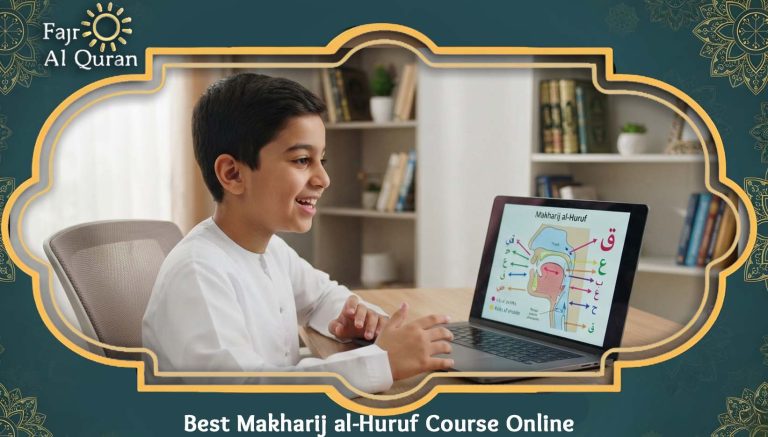
One important topic is Makharij al-Huruf, which refers to the articulation points from which Arabic letters are pronounced.
Understanding these articulation points helps learners distinguish between letters that may sound similar to beginners.
Students can also gradually explore basic Tajweed topics, including:
- Rules of Noon Sakinah and Tanween.
- Rules of Meem Sakinah.
- Basic Madd rules.
- Qalqalah.
- Proper pronunciation of Quranic letters.
- Basic stopping and starting principles.
Teachers should introduce these subjects according to the student’s reading ability.
The goal is to develop accurate Quran recitation through understanding, listening, repetition, and practical correction.
Quran Memorization for Beginners
Memorization is another important part of Quran learning for converts.
Many new Muslims want to memorize Surah Al-Fatihah and short Surahs that they can recite during Salah.
A beginner-friendly memorization plan usually focuses on small portions rather than asking students to memorize long passages immediately.
Effective memorization techniques include:
- Listening to a reliable Quran recitation.
- Reading the verse with teacher guidance.
- Repeating the verse several times.
- Memorizing a manageable portion.
- Connecting previously learned verses.
- Reviewing regularly to strengthen retention.
Students should also understand the importance of revision. Memorizing a passage once does not necessarily mean it will remain familiar without continued practice.
A realistic memorization routine helps beginners build confidence while maintaining what they have already learned.
Understanding Quran Meanings
Reading the Quran in Arabic is an important goal, but understanding its message can make the learning experience more meaningful.
For beginners who do not speak Arabic, English translations provide an accessible introduction to Quranic meanings.
Students may begin by exploring the meanings of Surah Al-Fatihah and other frequently recited Surahs.
They can also learn basic lessons about faith, gratitude, patience, worship, and good character through selected Quranic passages.
It is important to understand that translations communicate the meanings of Quranic verses but do not replace the original Arabic text or the scholarly discipline of Quranic interpretation.
With suitable guidance, new Muslims can gradually develop both their reading skills and their understanding of the Quran.
How Can New Muslims Learn Quran Online Step by Step?
Learning the Quran online becomes easier when you follow a clear sequence. Instead of trying to study everything simultaneously, focus on one stage at a time.
Here is a practical learning roadmap for adult beginners.
Step 1: Assess Your Current Quran Reading Level
Start by identifying what you already know.
Can you recognize Arabic letters? Have you studied Noorani Qaida? Can you read simple Arabic words?
A teacher can assess your current ability and identify the areas that need attention.
Step 2: Learn Arabic Letters and Basic Sounds
Begin with the Arabic alphabet and its pronunciation.
Spend time recognizing individual letters and practicing sounds that may be unfamiliar to you.
Step 3: Practice Reading with Noorani Qaida
Use structured exercises to understand vowels, letter combinations, Sukoon, and Shaddah.
Progress gradually from individual letters to connected words.
Step 4: Learn Basic Tajweed Rules
Once you develop basic reading skills, begin studying essential Tajweed principles.
Pay attention to articulation points and correct pronunciation before moving toward more advanced rules.
Step 5: Practice Quran Recitation and Memorization
Start reading short Quranic passages with teacher guidance.
Work on Surah Al-Fatihah and short Surahs while maintaining a regular revision routine.
Following these steps can make Quran learning more organized and less overwhelming. Your teacher can adjust the sequence and pace according to your individual progress.
What Are the Benefits of Online Quran Classes for New Muslims / Converts?
For many adults living in Western countries, finding suitable local Quran lessons can be difficult.
There may be limited access to qualified tutors, inconvenient class schedules, or a lack of beginner-friendly programs for adult converts.
Online Quran classes for converts offer a practical alternative by making structured learning accessible from home.
Learn from Home with Flexible Scheduling
One of the biggest advantages of online Quran education is flexibility.
Adults often manage demanding work schedules, family responsibilities, and other commitments. Traveling to a learning center at a fixed time may not always be practical.
Virtual lessons allow students to arrange classes around their availability.
Whether you live in the United States, United Kingdom, Canada, or Australia, you can look for an online Quran teacher who offers suitable lesson times across different time zones.
Learning from home also removes the need for commuting and makes it easier to maintain a regular study routine.
Receive Personalized One-on-One Attention At Quran Classes for New Muslims and Converts
Private Quran lessons can be particularly helpful for beginners.
In a one-to-one session, the teacher can focus entirely on your reading ability, pronunciation, and learning objectives.
You can ask questions whenever something is unclear and spend additional time practicing difficult letters or words.
For example, if you struggle with the pronunciation of a particular Arabic letter, your teacher can demonstrate its articulation and allow you to repeat it until you become more comfortable.
This individual attention can make Quran reading lessons more effective than a learning environment where the teacher must divide attention among several students.
Learn with Qualified and Supportive Quran Teachers
The teacher plays an important role in your Quran learning journey.
An experienced instructor can explain Arabic reading principles, demonstrate correct recitation, and understandably introduce Tajweed rules.
English-speaking Quran teachers are especially valuable for students who are unfamiliar with Arabic terminology.
They can explain unfamiliar concepts in English while helping students gradually become comfortable with Quranic Arabic.
A supportive teacher should also recognize that adult beginners may need repetition, encouragement, and additional time to understand certain lessons.
Build Confidence Without Feeling Embarrassed
Some new Muslims feel nervous about making mistakes while reading Arabic.
They may worry about mispronouncing words or asking questions that seem basic.
A welcoming online learning environment helps remove these concerns.
You can practice privately, repeat difficult exercises, and receive corrections without feeling uncomfortable in front of a large group.
Mistakes are a natural part of learning. The important thing is to recognize them, understand the correct pronunciation, and continue practicing.
With patience and regular guidance, you can gradually become more confident in your Quran reading abilities.
How to Choose the Best Quran Teacher for New Muslims?
Choosing the right Quran teacher is an important decision, particularly if you are beginning your Quran education without previous Arabic knowledge.
Not every Quran program is designed for adult beginners. Before enrolling, consider the teacher’s experience, communication skills, qualifications, and teaching approach.
Look for Experience Teaching Adult Beginners
Teaching adults who have never studied Arabic requires a different approach from teaching experienced Quran readers.
A suitable instructor should understand common beginner challenges and know how to explain Arabic reading concepts clearly.
Look for someone who is patient, encouraging, and willing to repeat lessons when necessary.
Ask whether the teacher has experience working with converts, non-Arabic speakers, or adult Quran beginners.
Choose an English-speaking Quran teacher for new Muslims / converts
Clear communication can make a significant difference in your learning experience.
An English-speaking or bilingual teacher can explain Arabic pronunciation, reading exercises, and basic Tajweed principles in a language you understand.
This is particularly important when you encounter unfamiliar concepts such as Makharij al-Huruf, Madd, Sukoon, and Shaddah.
You should feel comfortable asking questions and discussing any difficulties you experience during lessons.
Check Quran Teacher Qualifications
A teacher’s knowledge and qualifications are important considerations.
Before enrolling, ask about:
- Relevant Quranic education and certifications.
- Knowledge of Tajweed and Quran recitation.
- Previous teaching experience.
- Experience teaching non-Arabic speakers.
- Ability to assess beginner reading levels.
- Teaching methods and lesson structure.
Some students may also prefer teachers with Ijazah or other recognized Quranic qualifications.
Remember that qualifications should be considered alongside teaching ability. A knowledgeable instructor should also be able to communicate effectively and support your individual learning needs.
Consider Male and Female Teacher Availability
Personal comfort is another factor when selecting an online Quran tutor.
Some learners prefer a male teacher, while others feel more comfortable studying with a female Quran teacher.
Women who prefer learning from female instructors may wish to check whether the academy offers suitable female tutors.
Having both male and female teacher options can make Quran education more accessible to different students and families.
Look for Trial Classes and Flexible Scheduling
Before committing to a long-term course, consider whether the academy offers a trial lesson.
A trial class gives you an opportunity to understand the teaching approach, communicate your learning goals, and assess whether the instructor is suitable for your needs.
You can also ask about:
- Lesson duration and frequency.
- Available class schedules.
- Options for changing lesson times.
- Learning materials and resources.
- Progress assessments.
- Course fees and enrollment policies.
Choosing a program that accommodates your schedule and learning preferences can help you maintain consistency over time.
How Can Fajr Al-Quran Academy Help New Muslims Learn the Quran?
Beginning Quran education can feel challenging when you are unfamiliar with Arabic or have limited access to local Quran teachers. Fajr Al-Quran Academy provides an online learning option for new Muslims and adult beginners who want structured guidance while developing their Quran reading and recitation skills.
The goal of a beginner-friendly learning experience should be to help students progress from their current ability rather than expecting them to have previous Arabic knowledge.
Beginner-Friendly Quran classes for new Muslims / converts
Every student begins with a different level of understanding.
Some new Muslims may recognize a few Arabic letters, while others may need to start with the complete alphabet.
A suitable beginner program should take these differences into account.
At Fajr Al-Quran Academy, students can explore a learning path based on their reading ability and individual objectives. Beginners can focus on Arabic letters, Noorani Qaida, and basic pronunciation before progressing toward Quran reading and recitation.
This gradual approach makes Quran classes for new Muslims more accessible to adults who are learning Arabic for the first time.
Learn with Qualified Quran Teachers at Quran classes for new Muslims / converts
Having a knowledgeable teacher can make the learning process more organized and encouraging.
Students benefit from instructors who understand Quran reading, pronunciation, and Tajweed and can explain these subjects in a clear and approachable way.
For non-Arabic speakers, English communication is particularly helpful because it allows them to understand corrections and ask questions without unnecessary confusion.
When choosing a course, students should review the available teachers’ qualifications and teaching experience to ensure the program matches their expectations.
Personalized Quran Learning Plans
New Muslims may have different priorities.
One student may want to learn the Arabic alphabet, while another may already read Arabic and want to improve Quran recitation.
A personalized learning plan can help organize lessons around these individual goals.
Depending on the student’s level and selected course, learning objectives may include:
- Learning the Arabic alphabet and basic pronunciation.
- Studying Noorani Qaida.
- Developing Quran reading skills.
- Improving Quran recitation.
- Learning essential Tajweed rules.
- Understanding Makharij al-Huruf.
- Memorizing Surah Al-Fatihah and short Surahs.
- Exploring basic Quranic meanings.
This structured approach helps students focus on achievable learning goals instead of feeling pressured to master everything at once.
Flexible Online Quran classes for New Muslims / Converts Worldwide
Fajr Al-Quran Academy offers an online learning format that can be suitable for students living in different countries.
For Muslims in the USA, UK, Canada, and Australia, online lessons can provide access to Quran education without requiring travel to a local learning center.
Students can explore available schedules and choose lesson times that fit their daily responsibilities.
This flexibility is particularly useful for working adults, parents, and new Muslims balancing Quran education with other commitments.
Start Your Quran Journey with a Free Trial Class
Choosing the right learning program is easier when you have an opportunity to experience the teaching approach before enrolling.
A free trial class at Fajr Al-Quran Academy can provide an opportunity to discuss your learning goals, understand the available lesson options, and explore how your Quran education can begin.
You can use this opportunity to explain whether you are completely new to Arabic, already familiar with Noorani Qaida, or interested in improving your Quran recitation.
It is also a good time to ask questions about teacher availability, class schedules, and personalized learning plans.
Ready to take your first step toward reading the Quran? Explore Fajr Al-Quran Academy and book your free trial class to discuss a suitable learning path for your needs.
Conclusion: Start Your Quran Learning Journey with Confidence
Learning the Quran as a new Muslim is a gradual journey that begins with small but meaningful steps. You do not need previous Arabic knowledge or advanced reading skills to get started. With beginner-friendly lessons, patient teachers, and consistent practice, you can develop your Quran reading and recitation abilities at your own pace.
The right learning environment can make this experience more comfortable, especially when you are balancing Quran education with work and family responsibilities.
Fajr Al-Quran Academy offers an online learning option for adults and converts who want structured Quran guidance.
Begin your journey today! Join Fajr Al-Quran Academy and book your free trial class to discover supportive online Quran classes designed around your learning needs.