Arabic alphabet for beginners – Learn Fast and Easy
Learn the Arabic alphabet for beginners with easy steps, clear pronunciation, writing practice, and expert guidance from Fajr Al-Quran Academy.
Learning the Arabic alphabet for beginners is the first and most essential step for anyone who wants to read, write, and understand the Arabic language.
For beginners, mastering the letters of the Arabic alphabet may seem challenging at first, but with the right guidance, examples, and consistent practice, it becomes a smooth and enjoyable journey.
Whether you want to read the Quran, communicate in Arabic, study Islamic texts, or explore one of the world’s most influential languages, learning the Arabic alphabet for beginners opens doors to rich culture, history, and knowledge.
In this complete guide, you will learn how the Arabic letters work, how to pronounce them, and how to write them correctly.


Along with step-by-step explanations and access to the best online tools to help beginners master every letter easily.

Start Learning the Arabic Alphabet Today! If you’re ready to read, write, and pronounce Arabic with confidence, now is the perfect time to begin. Join the Leading platform Fajr Al-Quran Academy and learn the Arabic alphabet step-by-step with expert Egyptian teachers who make every lesson simple, engaging, and beginner-friendly.
What Is the Arabic Alphabet for Beginners?
When beginners first approach the Arabic alphabet, they discover a writing system that is beautifully unique, full of art-like shapes, flowing letters, and a structure different from Latin-based languages.
The Arabic script is written from right to left, and it consists of 28 main letters, each with its own distinctive sound and form.
Unlike English, Arabic has no capital or lowercase letters, but each letter changes shape depending on its position in a word.
This means every letter has four possible forms: isolated, initial, medial, and final.
For beginners, this might look overwhelming, but it actually helps learners read fluidly once they understand how the system works.
Additionally, Arabic is a phonetic language, meaning that once you know the pronunciation of each letter, you can easily read new words by sounding them out.
This makes the Arabic alphabet for beginners both systematic and predictable compared to some other world languages.
Another important point for beginners is that the letters of the Arabic.
The Arabic alphabet represents consonant sounds, with short vowels added using symbols called harakat.
These vowel marks help beginners read correctly, especially when starting with the Quran or children’s textbooks.
Overall, the Arabic alphabet provides beginners with a solid foundation to master Arabic reading, writing, and pronunciation.
Why Learning the Arabic Alphabet Is Easier for Beginners
Many beginners believe the letters of the Arabic alphabet are difficult because they look different from Latin script.
However, learning the Arabic alphabet is much easier than most people expect.
First, Arabic letters follow consistent rules and patterns, which means once you learn how one letter behaves in different positions, you can apply the same logic to all the others.
This creates a system that allows beginners to progress faster with practice.
Another reason learning the alphabet for beginners is easier is because Arabic has no unnecessary complications—no silent letters, no random spelling rules, and no confusing exceptions.
Each letter represents one sound, and the pronunciation rarely changes.
This makes Arabic more straightforward than English for beginners, especially when reading new words.
Beginners will also find that the Arabic alphabet includes many familiar sounds found in English and other world languages.
Even the unique sounds can be learned easily through listening practice, repetition, and examples.
Today’s learners also benefit from advanced online platforms, video lessons, interactive exercises, and personalized tutoring options from specialized academies like the Leading platform Fajr Al-Quran Academy, which provide structured support to beginners, making the learning process smoother and more enjoyable.
With modern digital tools, clear step-by-step lessons, and professional guidance, beginners can confidently learn the Arabic alphabet faster than they imagine.
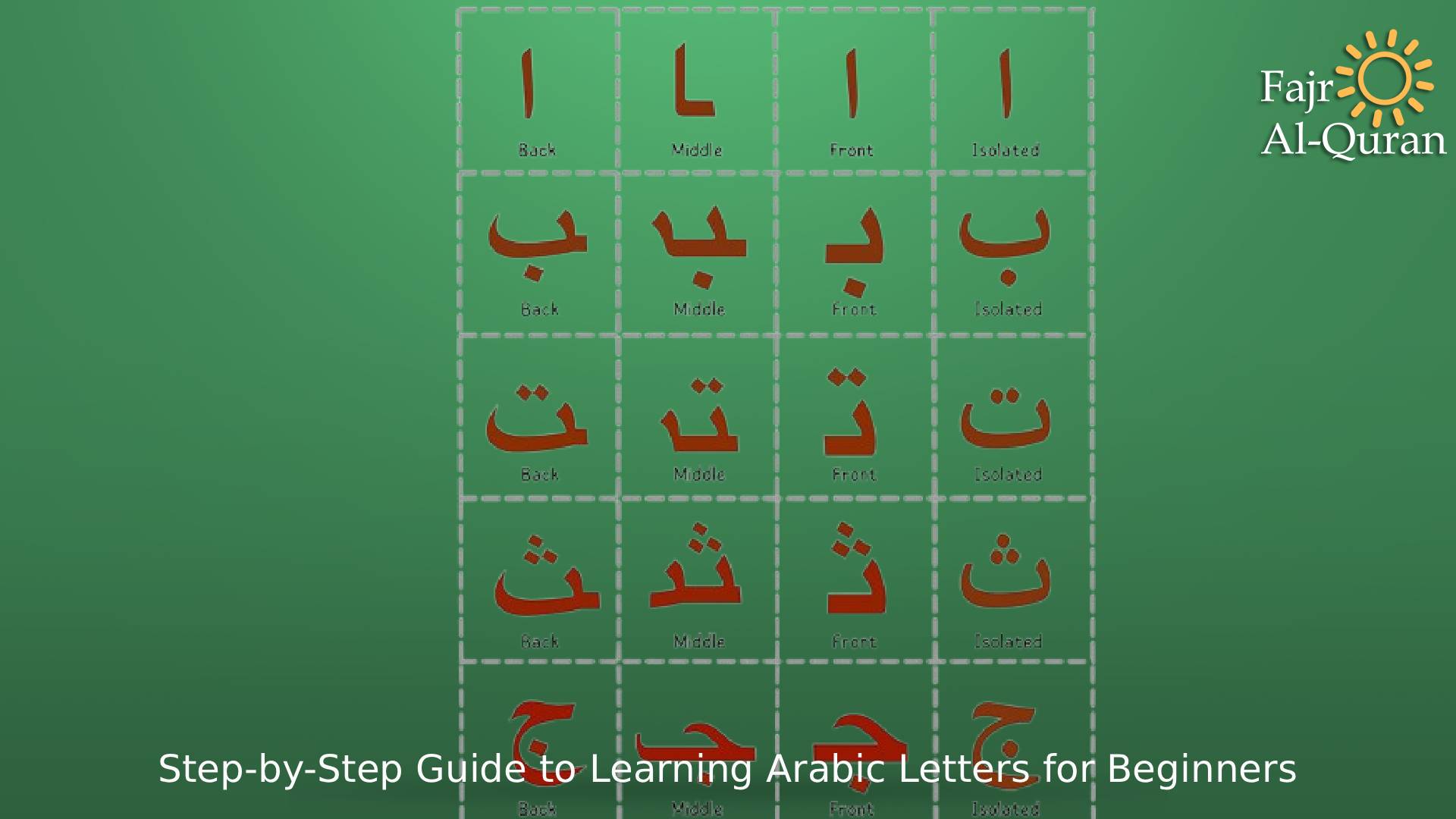
Step-by-Step Guide to Learning Arabic Letters for Beginners
Beginners need a structured, simple, and gradual method to learn the letters of the Arabic alphabet.
A step-by-step learning plan helps students master each letter while avoiding confusion or overwhelm.
Here is an ideal approach that beginners can follow:
Step 1: Start with Familiar Sounds
Beginners should first learn the letters that match sounds found in English—like ب (b), ت (t), د (d), and ك (k).
These are easy to pronounce and help learners build confidence.
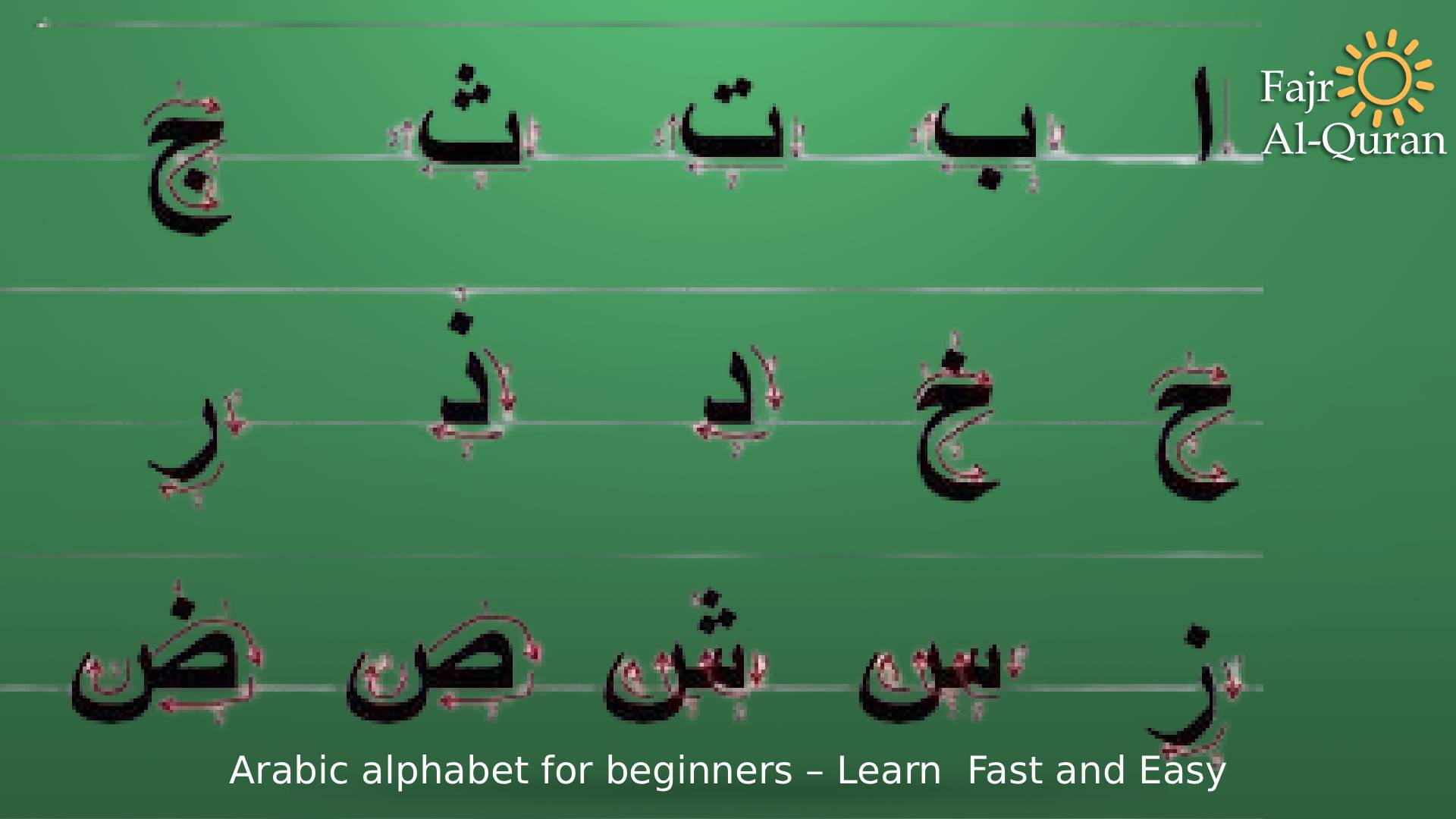
Step 2: Learn Letter Shapes and Forms.
Each Arabic letter changes shape depending on its position in a word.
Beginners should learn the isolated, initial, medial, and final forms of every letter.
Understanding these forms is essential for reading and writing connected Arabic text.
Step 3: Practice Writing Slowly and Clearly.
Writing the Arabic alphabet helps beginners memorize the shapes naturally.
Start by tracing the letters before writing them independently. Repetition is key.
Step 4: Learn Letters with Unique Sounds
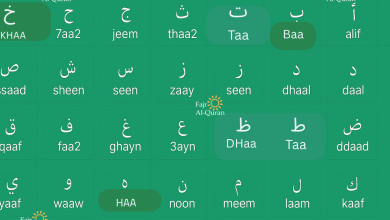
Arabic contains some sounds that are not found in Latin-based languages—like ح, خ, ص, ض, ط, ظ, ع, and غ.
Beginners should listen carefully to audio examples and imitate the sounds gradually.
Step 5: Study Through Words and Examples.
Once beginners recognize most letters, they should practice reading simple words, such as باب, كتاب, بيت, and نور.
This helps link theory to real-world reading.
Step 6: Review and Test Yourself Daily.
Consistent practice is essential to mastering the Arabic alphabet.
Beginners should read, write, and listen to letters every day, even for a few minutes.
Following these steps helps beginners progress smoothly until they can comfortably read and write all 28 Arabic letters with confidence.
How to Pronounce Arabic Alphabet Correctly for Beginners.
Correct pronunciation is one of the most important parts of learning the Arabic Arabic alphabet.
Each letter has a unique sound, some produced from the throat, others from the tongue, lips, or mouth’s interior.
Pronouncing Arabic letters correctly gives beginners the ability to read fluently and understand the meaning of Arabic words.
Beginners should focus on learning the makharij (points of articulation) of each letter.
For example:
- ب (baa’) is pronounced with the lips, similar to the English “b.”
- ت (taa’) comes from the tip of the tongue touching the gums.
- ح (haa’) is a soft throat sound.
- خ (khaa’) comes from the upper throat and sounds like “kh” in “Khan.”
- ع (‘ayn) is a deep throat sound unique to Arabic.
- غ (ghayn) sounds like the French “r” or Spanish “g” in “agua.”
Beginners should also practice short vowels (fatha, kasra, damma) and long vowels (alif, yaa’, waaw) because these help complete the pronunciation of words.
Using audio lessons, pronunciation charts, and professional guidance from trained tutors—especially native Egyptian teachers—helps beginners improve faster.
Many platforms today offer clear audio recordings for each letter, making pronunciation practice easier and more accurate.
Learn the Arabic Alphabet for Beginners Online for Free
One of the biggest advantages of learning the Arabic alphabet today is the availability of free online resources.
Beginners can now access lessons, videos, pronunciation guides, worksheets, and interactive tools without paying anything.
This makes learning more flexible, accessible, and beginner-friendly.
Free online Arabic alphabet resources include:
- YouTube lessons with step-by-step tutorials
- Free writing worksheets
- Interactive Arabic alphabet games
- Free PDF charts for letters and pronunciation
- Beginner-friendly mobile applications
- Fajr Al-Quran Academy offering complete alphabet courses
Many online academies like Fajr Al-Quran Academy provide trial lessons for beginners so they can experience structured learning before committing.
Some platforms even include live classes to teach the alphabet for beginners using guided explanations and examples.
Despite the abundance of free tools, beginners find the best results when combining free learning resources.
With expert guidance from a reputable academy like Leading platform Fajr Al-Quran Academy, which offers structured lessons, certified teachers, and personalized support that accelerates the learning process.
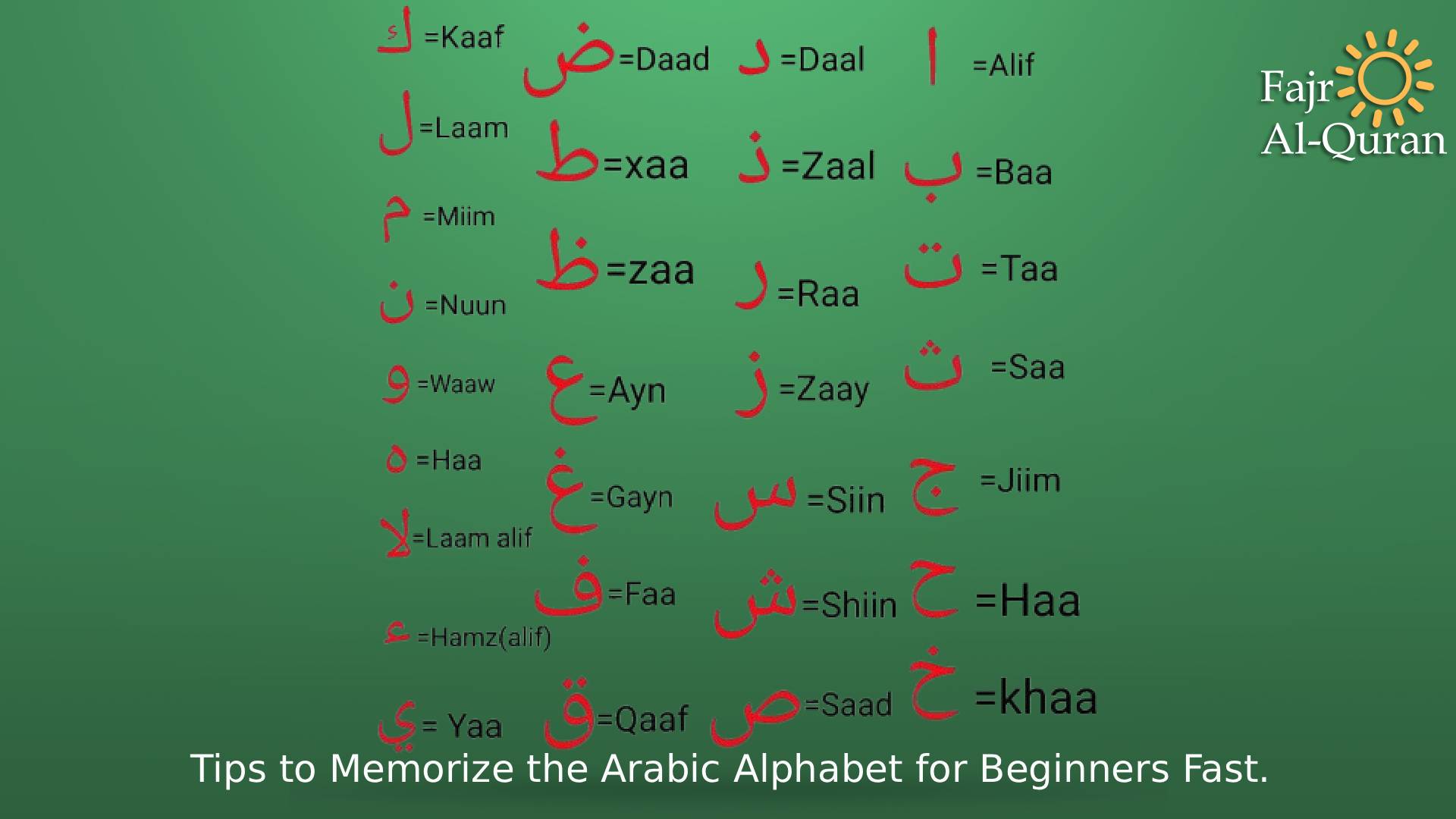
Tips to Memorize the Arabic Alphabet for Beginners Fast.
Memorizing the letters of the Arabic alphabet for kids and beginners becomes much easier with the right techniques.
Here are some effective tips for beginners:
- Learn in Small Groups
Instead of studying all letters at once, divide them into small groups of five or six.
This prevents overload and increases retention.
- Practice Writing Daily
Writing helps imprint each letter’s shape in your memory.
Beginners should write every letter repeatedly in all its forms.
- Use Flashcards
Flashcards with letter shapes, sounds, and examples help beginners memorize effectively.
Digital flashcards on mobile apps also work well.
- Listen to Audio Frequently
Hearing the letter sounds repeatedly improves pronunciation and recognition.
- Use Word Examples
Learning through words like باب (door), بيت (house), كتب (wrote) helps beginners connect the letters and their sounds.
- Teach Someone Else
Explaining a letter or word to another person strengthens your own memory.
- Practice with Games and Apps
Interactive learning tools help beginners memorize faster by turning repetition into play.
By using these techniques consistently, beginners can master the alphabet in a much shorter time.
Arabic Alphabet in English for Beginners
Arabic Alphabet in English -speaking beginners, learning the Arabic alphabet involves understanding how Arabic sounds correspond to English letters.
Some Arabic sounds match English completely, while others require practice because they don’t exist in the Latin script.
Examples of easy matches:
- ب = B
- ت = T
- د = D
- ف = F
- ك = K
Examples of partially similar sounds:
- خ = Kh (no exact English equivalent)
- غ = Gh (similar to French “r”)
- ق = Q (a deep “k” sound)
Beginners should avoid relying only on English transliteration because it cannot fully represent Arabic sounds.
However, using transliteration at the beginning helps learners recognize how letters sound before they master Arabic pronunciation.
To learn the alphabet properly, beginners must practice reading real Arabic text, including letters in their different forms, rather than depending solely on English spelling.
This builds confidence and fluency as learners transition from beginner level to complete mastery.
Best Online Academy to Learn the Arabic Alphabet for Beginners.
Choosing the right online academy is one of the most important steps for beginners who want to learn the Arabic Arabic alphabet effectively.
A strong academy provides structure, professional teaching, personalized feedback, and practice materials that free resources alone cannot offer.
The Leading platform Fajr Al-Quran Academy is one of the best online academies for beginners because it offers:
- Certified and experienced Arabic teachers
- Step-by-step alphabet courses designed for beginners.
- Live classes that focus on reading, writing, and pronunciation.
- Interactive teaching methods to help students master the alphabet quickly.
- Daily practice worksheets and recorded lessons
- One-on-one tutoring for personalized learning
- A full curriculum that leads learners from the alphabet to reading complete Arabic sentences.
The academy also provides a beginner-friendly environment suitable for kids, adults, and absolute newcomers who want to learn the letters of the Arabic alphabet in a simple, supportive, and structured way.
With modern teaching tools and dedicated instructors, learners can progress from not knowing any letter to reading and writing confidently in a short period.
Learn the Arabic Alphabet with Egyptian Teachers
Egyptian teachers are widely recognized for their clear pronunciation, friendly teaching style, and rich linguistic heritage.
This makes them especially effective for teaching beginners the alphabet for beginners, helping them understand letter sounds and shapes with ease.
Egypt is known for its strong Arabic language tradition, and many famous reciters, scholars, and linguists come from Egyptian backgrounds.
Learning the Arabic alphabet with Egyptian teachers gives beginners several advantages:
- Clear and accurate pronunciation.
- Strong command of both Modern Standard Arabic and Quranic Arabic.
- Ability to explain difficult letters like ع, ض, ص, and ط.
- Cultural examples that help beginners understand the language better.
- Patient teaching style suitable for all ages.
Egyptian teachers also follow structured methods for teaching beginners how to read, write, and pronounce Arabic letters correctly.
Through regular practice, guided writing exercises, and real-world examples, beginners gain confidence and fluency faster than learning alone.
The Leading platform Fajr Al-Quran Academy offer professional Egyptian teachers who specialize in helping beginners learn the alphabet step by step.
Conclusion
Learning the Arabic alphabet for beginners is not only possible but enjoyable with the right guidance, structure, and consistent practice.
The alphabet forms the foundation of reading and writing Arabic, and beginners who take the time to master it will find themselves able to explore Arabic texts, Quranic reading, daily communication, and much more.
With resources, examples, online tools, and the support of professional teachers, especially through structured academies like the Leading platform Fajr Al-Quran Academy, beginners can learn every letter, sound, form, and example with clarity and confidence.r level to complete mastery.